From one road to a city of towers.
You start with empty grass and a budget. Here is what happens next, and what decides whether your city grows or stalls.
The first hour
Six steps take you from nothing to a working town.
Connect to the outside
Nobody can move in until a road reaches the edge of the map. Each household then arrives in its own moving truck.
Draw your streets
Roads go straight or curved at any angle. Streets, avenues, boulevards, one-way roads and highways with ramps are all yours to lay.
Zone the land
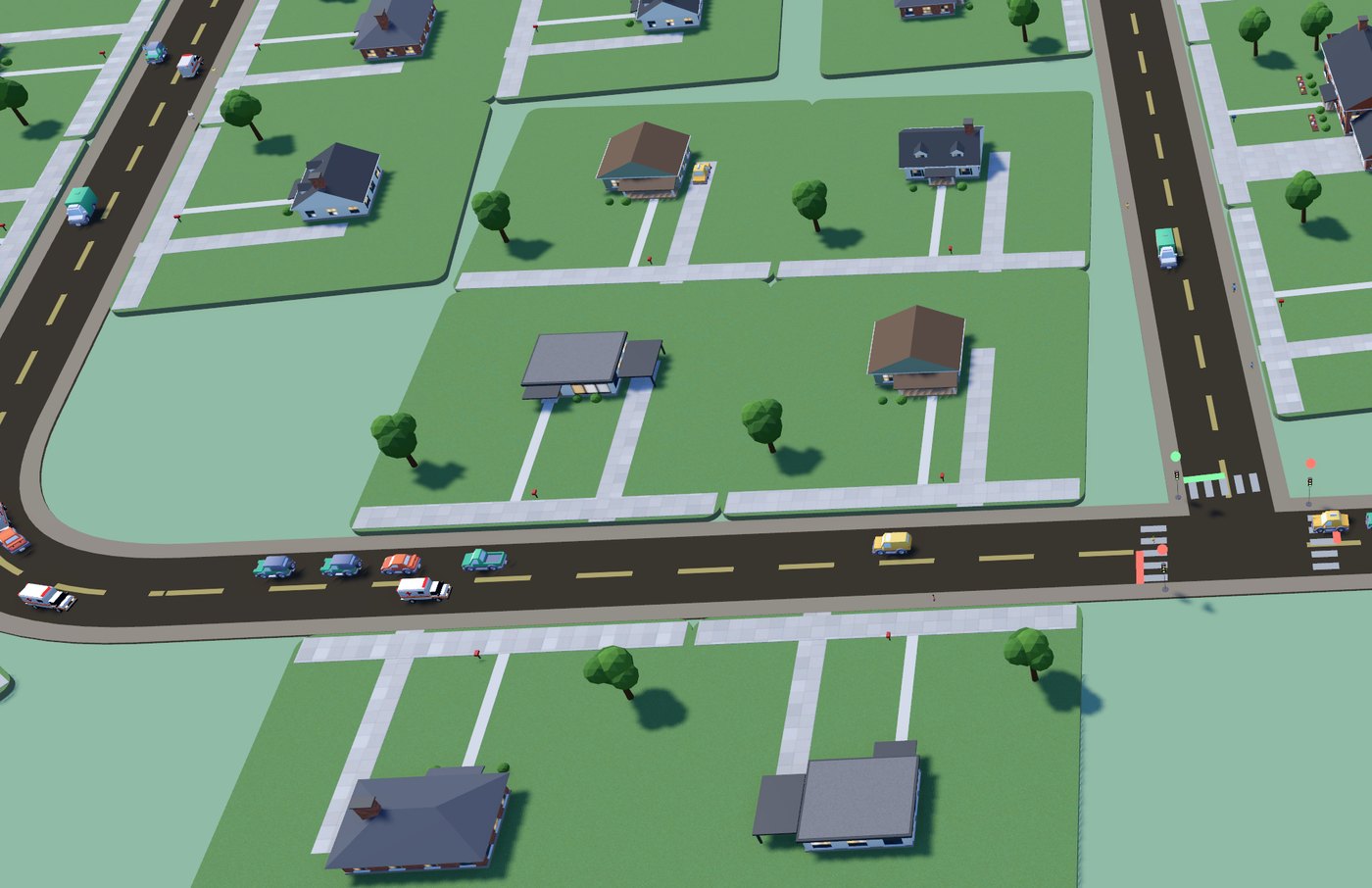
Mark lots for homes, shops, offices and industry, in low, medium or high density. Lots follow the road, two rows deep.
Switch on the utilities
Electricity, water and sewers travel along the roads. Nothing is built without power and water, so place a source beside any road.
Add services
Police, fire, clinics, schools and parks each cover the homes around them. A dotted circle shows who they reach before you place them.
Balance the books
Residents and jobs pay tax every day; roads and services cost money. Set every tax and every price in the budget window.
Buildings go up, then grow
A zoned lot becomes a fenced construction site first. Materials arrive, the frame rises in stages, and a crane works on anything bigger than a house.
- Low density stays houses and small shops for good.
- Medium density grows to apartments and offices.
- High density grows on to towers.
- Houses are rebuilt bigger after the family has been happy for 45 days in a row.
Happiness runs the city
Every resident has a happiness score that moves with their job, commute, education, home and what is near it. The city's growth follows the total.
- Happy city: new buildings go up faster.
- 55% or more: the people in a building are happy enough for it to be rebuilt bigger.
- Below 38%: nobody moves in, nothing is built, and the unhappiest people leave.
- Neighbourhoods get a name, their own happiness, and a list of what their people want fixed.
What residents want near home
Homes need jobs and jobs need people, so zone all of it. Beyond that, people notice what is missing.
Work they can reach
Not everyone owns a car. People without one walk, take the bus or hail a ride, and will not take a job that is too far.
Everyday businesses
A bank, grocery store, gym and gas station near home make people happier. You place them yourself, and they give jobs.
Schools for the children
Children without a school in reach are unhappy. Adults with a diploma can study for a degree at a college or university.
Parks
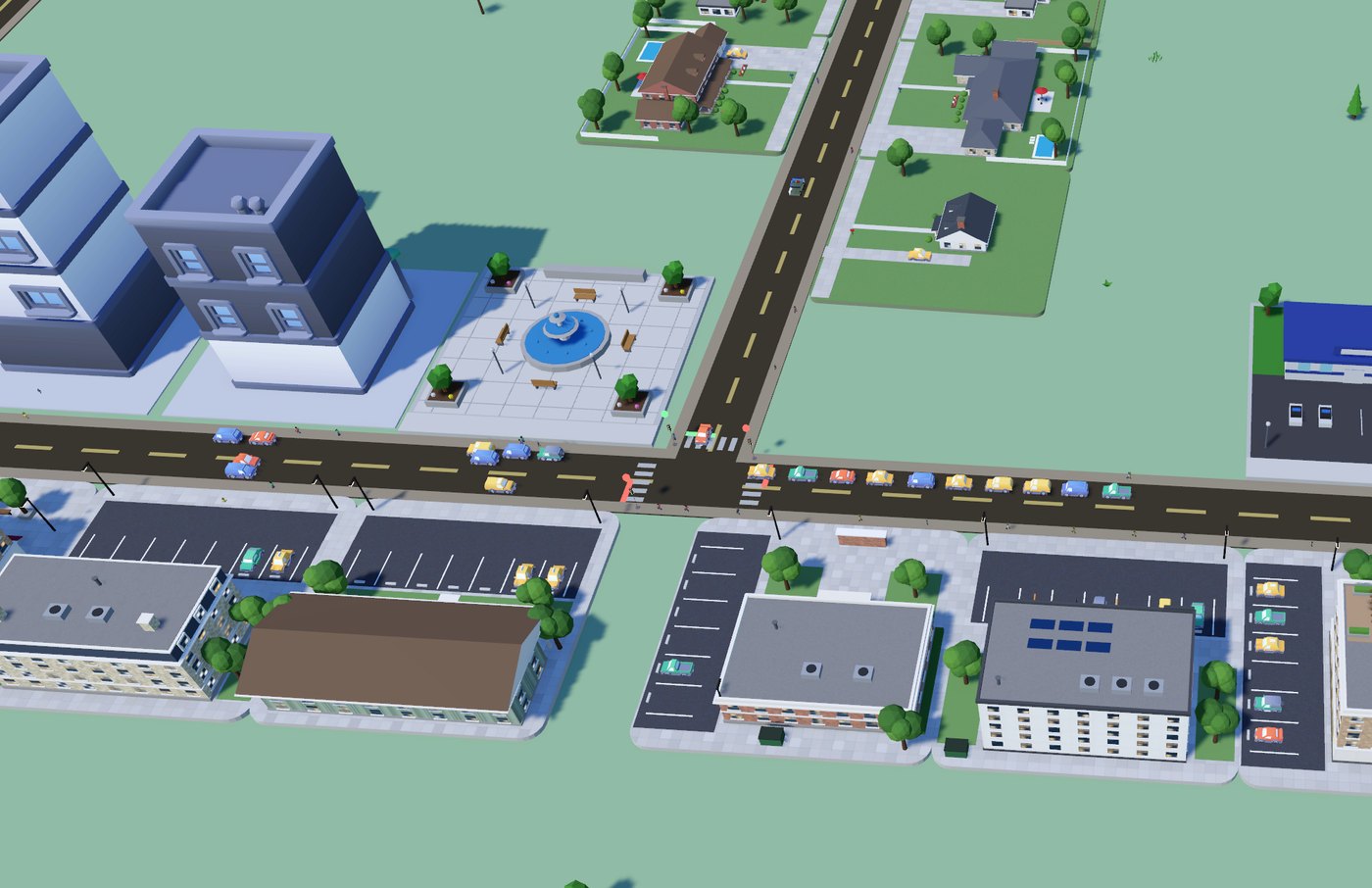
Pocket gardens, playgrounds, fountain plazas and pond parks. People miss having one nearby.
Somewhere to park
Cars park in the lot of the building they visit, then a garage, then the kerb. You set the garage price.
Fair prices
Higher taxes, bills, fees and fares make people less happy, and unhappy people pay only half their tax.
Tools that tell you what is going on
You are never guessing why the city is doing what it does.
City Planner
Tells you what most needs doing, why people are out of work, and which zone is in demand.
City Feed
Residents post complaints, praise, help-wanted ads and pet photos. Click a post to meet the person who wrote it.
Click anything
A person, a car, a building or a junction: each opens its own numbers, from savings and tickets to staff and earnings.
Try it yourself
The City is coming to Steam Early Access.
Coming to Steam